|
 |
 |
 |
Application
Gelatine is a translucent, colourless, gelling
agent that is most commonly used in sugar confectionery,
dairy, dessert, meat and fish products, pharmaceutical products,
photography and cosmetic manufacturing.
Its ability to form a thermo-reversible gel is the key of
a vast range of confectionery applications that melts at
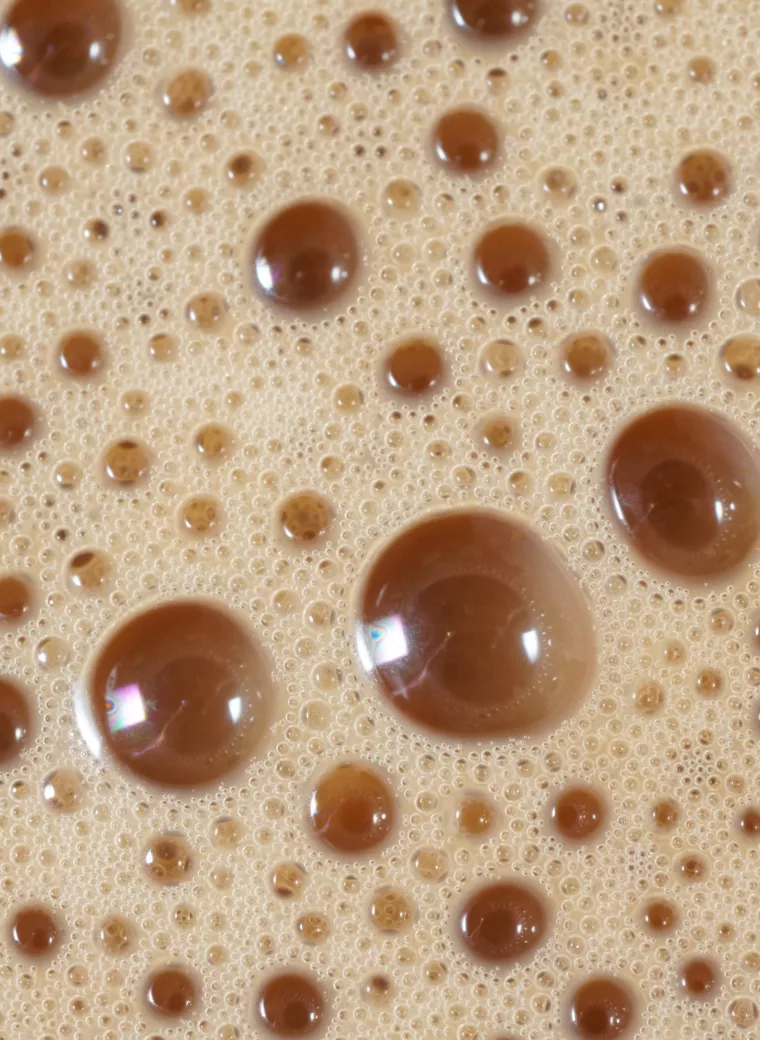
around body temperature. Gelatine also has unique foaming,
emulsifying and binding properties, making it virtually irreplaceable
in many applications.
In dairy specialties, such as yoghurts, cream desserts, mousses,
spreads, margarines and low-fat butters it provides a range
of functionality from improving and softening texture, facilitating
aeration and preventing syneresis (separation of dairy product
and whey).
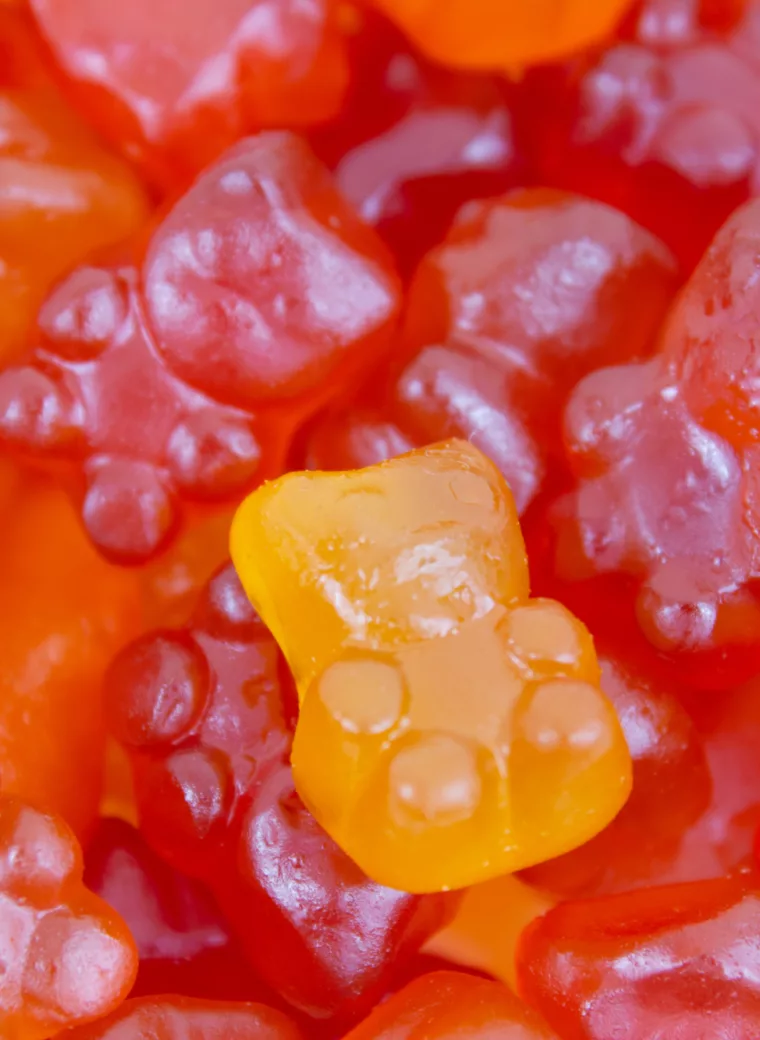
In confectionery applications gelatine has both stabilising
and whipping properties and is commonly used in gummy bears,
jubes and marshmallow.
| APPLICATION |
FUNCTION |
| Confectionery |
Gelling agent in jelly confectionery, emulsifier
in fruit chews, adhesive and binder for liquorice. |
| Marshmallow |
Whipping agent in aerated confectionery. |
| Dairy |
Prevents syneresis in yoghurt products, improves
texture in cream desserts, spreads and ice cream products;
stabilises and aerates in mousses and ice cream. |
| Water jelly desserts |
Gelling agent, binding water and forming a soft,
elastic, bright, transparent gel. |
| Meat products |
Gelling agent binding water and juices, and stabilising. |
Chemistry
Gelatine is obtained from animal raw materials
such as collagen, hides and bone, and is considered a natural
complement of meat-based proteins. While Beef collagen is
the most common source, Gelatine can also be extracted from
Porcine and Fish raw materials, each origin having its own
unique functional properties.
Since Gelatine is often considered as a food in its own right, it is not
subject to food additive legislation and as such has no E-number.
Chemically, Gelatine is a mixture of peptides and proteins produced by
the partial hydrolysis of collagen extracted from the appropriate animal
source. The natural molecular bonds between individual collagen strands
are broken down into a form that rearranges more easily. It is composed
of more than 85% protein, less than 13% water and less than 2% minerals.
Gelatine is a fully digestible protein and contains 18 different amino
acids, including 8 out of the 9 essential amino acids, with the exception
being tryptophan. It is particularly rich in glycine, proline and hydroxyproline,
which together represent almost 50% of the composition of the molecule.
Hydroxyproline is an amino acid specific to Gelatine.
Properties
Gelatine melts to a liquid when heated and solidifies when cooled again.
Together with water, it forms a semi-solid colloid gel. Gelatin forms a
solution of high viscosity in water, which sets to a gel on cooling, and
its chemical composition is, in many respects, closely similar to that
of its parent collagen.
Gelatine is water-soluble and compatible with most other hydrocolloids,
including vegetable colloids such as agar-agar, alginates, carrageenans
or pectins. It is compatible with sugars, corn syrups, polyols, edible
acids and flavours. Gelatine will disperse easily in water and concentrations
of 40 – 45% are attainable. Typically, Gelatine needs to swell before it
solubilises and hydrates in hot water, and various methods are available.
Once dissolved in water above its setting temperature, Gelatine will yield
solutions typically ranging from 1.5 – 7.5 mPa.s.
Gelatine gels exist over only a small temperature range, the upper limit
being the melting point of the gel, which depends on gelatin grade and
concentration and the lower limit, the freezing point at which ice crystallizes.
The mechanical properties are very sensitive to temperature variations,
previous thermal history of the gel, and time. The viscosity of the gelatin/water
mixture increases with concentration and when kept cool (-4 °C).
There are several important quality parameters to consider when selecting
a source of Gelatine. Perhaps the best known measure of gel strength is
the ‘Bloom’ measurement, with the Bloom values for Rousselot Gelatines
ranging from 50 to 300 grams.
Other important quality parameters are particle size distribution ( i.e.
mesh size), viscosity, colour and flavour.
Back to the top |
|
 |
|


 |

For
more information on Rousselot, our
supplier of Gelatine, please click
here. |
|
 |
|